Chemical Name:
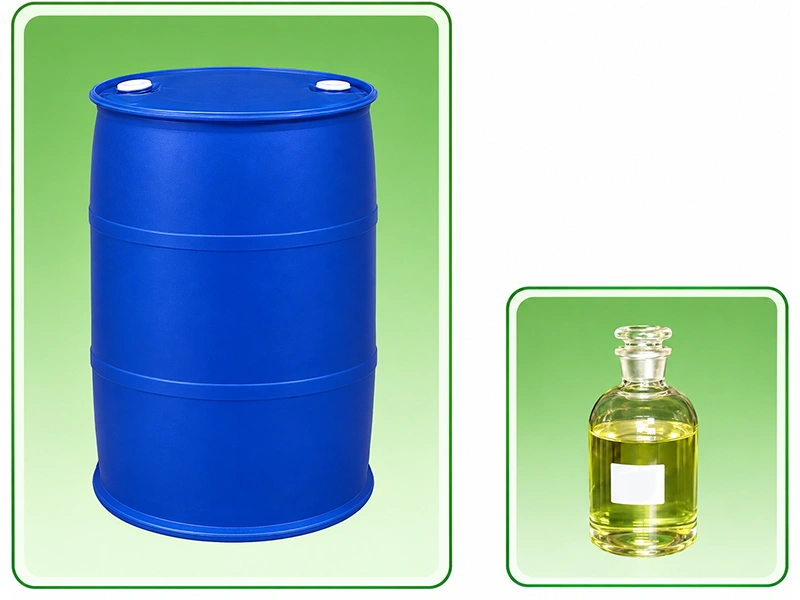
Liquid Sodium Dimethyldithiocarbamate (SDD Solution)
CAS No.
128-04-1
Molecular Formula:
(CH₃)₂NCS₂Na
EINECS:
143.21
| Grade | Solid | Liquid |
|---|---|---|
| Appearance | White or grayish crystals | Light yellow transparent liquid |
| Content (m/m, %) | 90–95 | 40–41 |
| Free alkali (as NaOH, m/m, %) | 0.05–0.50 | 0.05–0.50 |
| pH | 9.5–12.5 | 9.5–12.5 |
Chemical Name:
Sodium dimethyldithiocarbamate
Molecular Formula & Molecular Weight:
Solid: C₃H₆NS₂Na · 2H₂O (SDD) | 179
Liquid: (CH₃)₂NCS₂Na | 143.21
Physical & Chemical Properties:
The solid form appears as white or grayish crystals, while the liquid form is a pale yellow transparent solution, both soluble in water. Melting point: -15°C, Freezing point: -7.6°C, Boiling point: 143°C. It is non-irritating to skin and water-soluble. The product remains stable in alkaline media but decomposes when exposed to acidic substances or high temperatures. Contact with oxygen may lead to dimerization and quality degradation. It must be stored in airtight containers.
Applications:
Used as a terminating agent for emulsion-polymerized styrene-butadiene rubber (SBR) and SBR latex, industrial bactericide, vulcanization accelerator for rubber products, agricultural insecticide, and for industrial wastewater treatment. Also applied in sugar refining, ore processing, heavy metal precipitation, paper manufacturing, electroplating coloring, and leather treatment.
Packaging & Storage:
Solid: Packed in clean, dry, film-lined composite bags, 25±0.1 kg per bag.
Liquid: Packed in 200L plastic drums, 200-220 kg per drum.
The product should be stored in sealed containers in a dry, well-ventilated warehouse with a shelf life of 1 year. If stored beyond one year, retesting is required. The product may continue to be used if specifications are met.
Liquid Sodium Dimethyldithiocarbamate is used in industrial applications including SBR and SBR latex production, industrial bactericide applications, rubber vulcanization, wastewater treatment, sugar refining, ore processing, and heavy metal precipitation.
Zhongkerongda's listed specifications for liquid SDD include an active content of 40–41%, a free alkali content of 0.05–0.50%, and a pH of 9.5–12.5. The product appears as a light yellow transparent liquid.
The main difference is their physical form and concentration. Solid SDD has a specified content of 90–95% and appears as white or grayish crystals, while SDD Solution has a content of 40–41% and appears as a light yellow transparent liquid. The appropriate form depends on the customer's production process, handling requirements, and dosing system.
Liquid SDD is supplied in 200 L plastic drums, with a specified net weight of 200–220 kg per drum. Please confirm the final packaging and loading arrangements with Zhongkerongda when placing an order.
SDD Solution should be stored in sealed containers in a dry, well-ventilated warehouse. The stated shelf life is one year. The product should be protected from acidic substances and high temperatures. If stored beyond one year, it should be retested before further use.
Yes. Industrial wastewater treatment is one of the applications listed by Zhongkerongda. SDD may also be used in heavy metal precipitation processes. The appropriate dosage and treatment conditions depend on the wastewater composition and should be determined through application-specific testing.
Mobile/Wechat:+8616678980013
E-mail: xiangrong_523@163.com
Copyright © 2025 by Qingdao Zhongke Rongda New Materials Co., Ltd. All Rights Reserved Designed by Huishang

